 Books written with the assistance of
NB and Orbis:
- Spies: The Rise and Fall of the KGB in America (coauthors Harvey Klehr, Alexander Vassiliev). Yale University Press, 2009.
- Early Cold War Spies: the Espionage Trials that Shaped American Politics (coauthor Harvey Klehr), Cambridge University Press, 2006.
- In Denial: Historians, Communism, and Espionage (coauthor Harvey Klehr), Encounter Books, 2003.
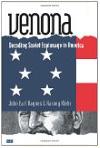
- Venona: Decoding Soviet Espionage in America (coauthor Harvey Klehr) Yale University Press, 1999.
- The Soviet World of American Communism (coauthors Harvey Klehr and Kyrill Anderson) Yale University Press, 1998.
- Red Scare or Red Menace? American Communism and Anticommunism in the Cold War Era Ivan Dee, 1996.
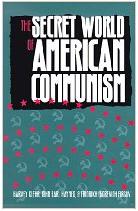
- The Secret World of American Communism (coauthors Harvey Klehr and Fridrikh Firsov) Yale University Press, 1995.
- The American Communist Movement: Storming Heaven Itself (coauthor Harvey Klehr) Twayne Publishers, 1992.
- Communism and Anti-Communism in the United States: An Annotated Guide to Historical Writings Garland Publishing, 1987.
- Dubious Alliance: The Making of Minnesota’s DFL Party University of Minnesota Press, 1984.

|
I’m a research historian in a very specialized field, Soviet espionage in the 1930s-1950s. In the mid-1990s an extremely rich archival resource became available, the Venona decryptions. This consisted of 3000+ ciphered international telegraphic cables exchanged in the 1940s between Soviet intelligence stations in the U.S. and elsewhere with their headquarters in Moscow. These cables were intercepted by the U.S. Army Signals Intelligence Service (predecessor to todays National Security Agency) and years later deciphered in whole or in part in what was entitled the ‘Venona’ project.
As a primary documentary source this is extremely valuable material: candid contemporary exchanges by professional intelligence officers about their activities, exchanges they thought to be entirely secret because of Soviet confidence that their cipher system was unbreakable. It was unbreakable, except that the Soviet cipher generating agency made a procedural error that made some of the messages vulnerable to cryptanalytic attack. U.S. Army Signals Intelligence noticed the error and began the Venona project.
The Venona decryptions were made public in 1995. However, exploiting the richness of this material was a very difficult research challenge. NSA released simply the deciphered messages as images, not searchable text. There was no index, no cross-referencing system, no appendix of cover names matched to real names, and no organization beyond chronology and sending/receiving station. Gaining intellectual control over the 3,000+ cables (5,000+ pages of text), noting who was doing what in which message, was a formidable challenge. And once that was done, there was a need to link that information to names and events that were also documented in espionage case court proceedings, FBI files released under the Freedom of Information Act, congressional hearing testimony, Communist International records in Moscow, memoirs, etc; thousands of pages of other documents to be integrated with the Venona decryptions.
It would have been one thing if I had years of uninterrupted time to devote to this project or a crew of two or three smart research assistants, but I had neither the time (I had to work for a living!) nor any staff. Nonetheless, in 1999 Yale University Press published my and Harvey Klehr’s, Venona: Decoding Soviet Espionage in America. What made it possible was Nota Bene and, in particular, Orbis.
I read through the deciphered cables, noting down the names and other significant information in each message. These notes were then entered into an Orbis textbase. Orbis then allowed me intellectually control the material. All of the cables where a certain person’s activities were discussed could be instantly identified. Sometimes a single person would appear in one message with his or her real name, but other times only with a cover name, and from time to time, this cover name might be changed. Sometimes the Russian writers of the messages would use variant Cyrillic transliterations of an English-language name, which produced variant Latin alphabet spellings when NSA deciphered the messages and translated them into English. Here, again, Orbis allowed me to swiftly identify and match up all of the messages dealing with a single person, single institution, or a particular activity.
Further, over the decades I had accumulated tens of thousands of pages of notes I had created from my research in the history of American communism, anti-communism, and espionage. All of these notes were in textbases, so the task of matching up the information in Venona with documents from many hundreds of other sources was only a matter of an Orbis search and then reading the old notes to see if there was relevant material requiring more detailed review.
From my point of view, NB and Orbis were indispensable to writing Venona: Decoding Soviet Espionage in America, and indispensable as well to the research and writing that went into the nine other books I have authored or co-authored with my colleague Harvey Klehr. I was an early, 1980s, purchaser and user of NB. So necessary is NB and Orbis to my sort of archival research and writing that I stuck to my increasingly obsolete Windows XP machine until NB 10 became available for 64-bit computers.
One additional anecdote. Over the years historian colleagues call or e-mail with a question roughly saying ‘John, is there anything in Venona (or one of the other sources I’ve explored) about John Doe.’ When I respond within a day, or even within an hour, that ‘yes, there is’ and provide the exact messages to look at or ‘no there isn’t, you don’t need to read through the 3,000 messages looking for him,’ they think I’m a miracle worker. I’m not. I have NB and Orbis, and that is enough.
|


